
Master Pokémon notify tools: Win TCG drops & boost ROI
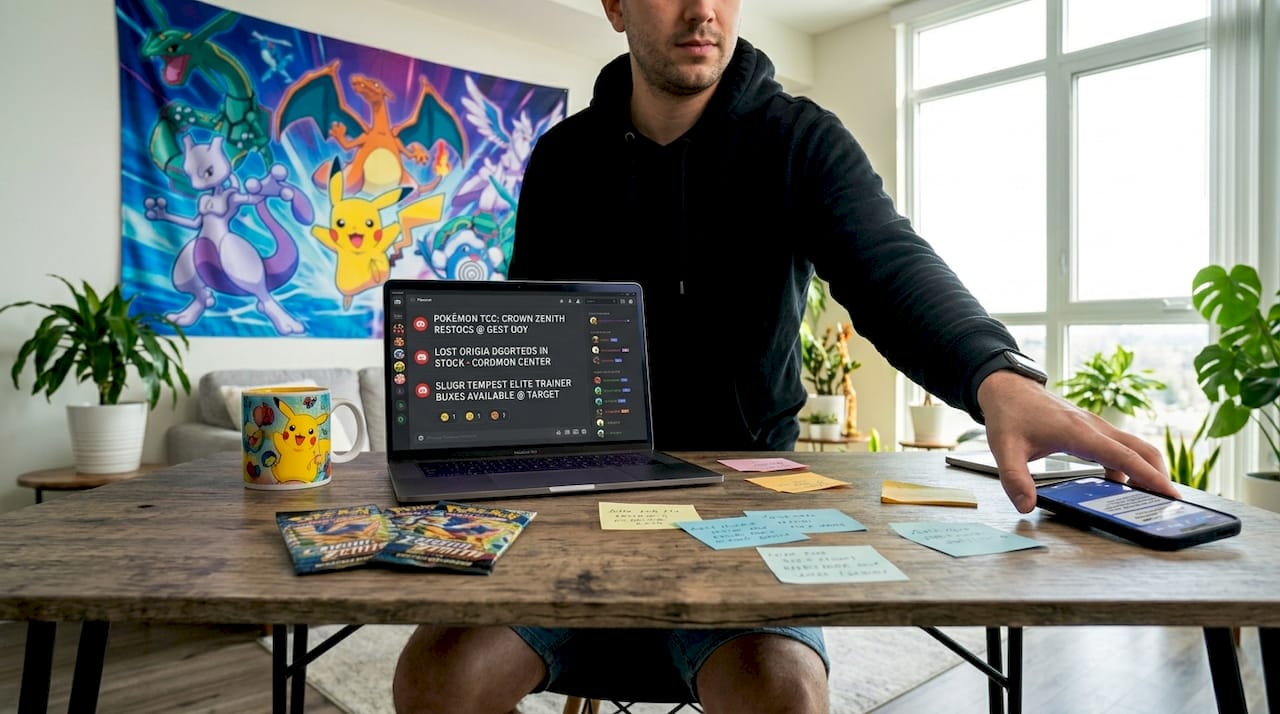
The Pokémon TCG market in 2026 moves faster than most collectors expect. Products like Prismatic Evolutions and Surging Sparks sell out within seconds of going live, and the gap between getting notified and actually checking out is where most people lose. Whether you’re hunting MSRP deals at Target and Walmart or sourcing raw cards for PSA grading flips, having the right notification tool is no longer optional. This article breaks down the top Pokémon notify services, compares their features side by side, and shows you how to turn those alerts into real grading ROI.
Table of Contents
- Key criteria for Pokémon TCG notification tools
- PokeNotify: Fast filtering for dedicated TCG hunters
- PokeAlerts & PokeWatcher: Options for different needs
- Side-by-side comparison: Which Pokémon notifier is best?
- Market flips & grading: Maximizing alerts for ROI
- What alert services get wrong about winning TCG drops
- Upgrade your TCG game: Resources and next steps
- Frequently asked questions
Key Takeaways
| Point | Details |
|---|---|
| Speed matters | Faster, filtered alerts give collectors a crucial advantage over competitors for hot Pokémon TCG drops. |
| Choose tools wisely | Pick a notification service that matches your collection style—Discord for pros, app-based for casual users. |
| Grade selectively | Only grade cards with a resale value four times higher than total cost for the best ROI. |
| Analyze market data | Use pop reports and scarcity trends to guide your buying and grading decisions for maximum returns. |
| Beat the bots | Alerts help, but combine them with market research and quick action to outpace scalpers and maximize profits. |
Key criteria for Pokémon TCG notification tools
Before reviewing each tool, let’s clarify what makes a Pokémon notify service truly valuable for serious collectors and savvy resellers.
Not all notification services are built the same. Some are fast but noisy. Others are accurate but slow. The difference between a useful tool and a frustrating one comes down to a handful of core factors that every collector or reseller should evaluate before committing to a subscription.
Speed and reliability of alerts is the single most important factor. In competitive drops, a 30-second delay can mean the difference between securing a product at MSRP and paying 3x resale on the secondary market. Services that route alerts through Discord channels typically deliver faster than email-based systems, but even Discord tools vary significantly in latency depending on server infrastructure and webhook setup.
Retailer coverage matters just as much. If you’re in Canada, you need a tool that monitors Pokemon Center Canada, Walmart Canada, and EB Games, not just US-based retailers. For US collectors, coverage should span Target, Walmart, GameStop, Best Buy, Dollar General, and the Pokemon Center US site at minimum.
Filtering options separate power users from casual ones. High-volume drops generate dozens of alerts in minutes, and without proper keyword or product filters, your notification feed becomes unusable noise. The best services let you filter by product name, retailer, region, and price point.
Here’s what to look for when evaluating any Pokémon notify service:
- Alert delivery method: Discord, push notification, email, or SMS. Discord-based alerts tend to be fastest for active users.
- Retailer coverage: Does it cover your region? US only, or US and Canada both?
- Filtering granularity: Can you filter by specific set names, product types, or price thresholds?
- Community size: Larger communities often surface intel faster, but also create more noise.
- Cost vs. value: Free tools exist, but paid tiers typically offer faster alerts and better filtering.
- Bot and scalper competition: Even the best alert can’t overcome ACO (auto-checkout) bots operating at machine speed.
Pro Tip: Always test a notification service during a mid-tier drop before relying on it for a major release. That’s how you identify latency issues before they cost you a high-demand product.
As alert comparison data shows, high alert volume during releases causes significant noise, regional latency affects non-US users, and bots and scalpers still outpace human-speed alerts in many scenarios. Knowing this going in lets you build a smarter strategy around your tools rather than depending on them blindly.
PokeNotify: Fast filtering for dedicated TCG hunters
Now that you know what to look for, let’s examine the top Pokémon notify services, starting with the tool preferred by many pro resellers.
PokeNotify has built a strong reputation in the TCG community for a reason. It combines broad retailer coverage with advanced Discord-based filtering, making it the go-to choice for collectors who are serious about hitting drops at MSRP and resellers who need speed and precision on launch day.

According to coverage data, PokeNotify monitors 100+ retailers across the US, Canada, and global regions, including Pokemon Center Canada, Walmart Canada, and EB Games. That regional depth is a significant advantage for Canadian collectors who often feel underserved by US-centric tools.
PokeNotify strengths at a glance:
- Broad retailer coverage across US and Canada
- Advanced filtering by product, retailer, and region
- Rapid Discord webhook alerts with minimal latency
- Strong community with active moderators and drop intel
- Performs especially well during high-demand launches like Prismatic Evolutions ETBs and special collection boxes
Ideal users:
- Collectors targeting MSRP drops at major retailers
- Resellers flipping sealed product for profit
- Canadian users who need regional store coverage
- Power users comfortable navigating Discord servers
Potential drawbacks:
- Requires Discord familiarity to set up and filter alerts properly
- During peak drops, even fast alerts may not overcome ACO bot competition
“PokeNotify is a leading Discord-based notification service for Pokémon TCG restocks, drops, and deals, covering 100+ retailers in US, Canada, and global regions including Pokemon Center Canada, Walmart Canada, EB Games.” — PokeNotify vs. PokeAlerts 2026
Pro Tip: Inside PokeNotify’s Discord, use keyword filters to mute product categories you don’t care about. If you’re only targeting Elite Trainer Boxes and booster bundles, filtering out single-pack alerts alone will cut notification noise by 40% or more during busy release windows.
PokeNotify is the strongest all-around option for users who want speed, coverage, and filtering in one package. It’s not perfect, but for the serious reseller or dedicated collector, it’s the closest thing to a complete solution currently available.
PokeAlerts & PokeWatcher: Options for different needs
Beyond PokeNotify, here’s how other major platforms can fit your collection or flipping approach.
PokeAlerts is PokeNotify’s closest Discord-based competitor. At $5.99 per month with a 4.8-star rating and 13,400+ members, it has a large and active community. It also monitors 100+ stores worldwide, including US and Canada retailers, making it a legitimate alternative for collectors who want broad coverage at a lower price point.
PokeAlerts key details:
- Price: $5.99/month
- Community: 13,400+ Discord members
- Coverage: 100+ stores globally, including US and Canada
- Rating: 4.8 stars
- Mixed reviews on alert speed during peak drops
- Some users report billing challenges and inconsistent customer support
PokeAlerts is competitive on price and community size, but speed and billing reliability have drawn mixed feedback from experienced resellers who depend on consistent performance during high-demand launches.
PokeWatcher takes a completely different approach. Rather than Discord, it’s a mobile-first app with a free-to-start model and an optional Pro upgrade. It delivers real-time restock alerts for TCG products at major US retailers including Target, Walmart, and Best Buy, using push notifications and email rather than Discord.
PokeWatcher key details:
- Platform: iOS app (free with Pro upgrade option)
- Coverage: Major US retailers (Target, Walmart, Best Buy)
- Features: Watchlists, local inventory checker, push and email notifications
- Best for: Casual collectors who prefer mobile over Discord
- Limitation: US-focused, less suited for Canadian users or resellers needing global coverage
PokeWatcher strengths:
- Zero Discord setup required
- Local inventory checker is genuinely useful for in-store hunters
- Watchlists let you track specific products without manual searching
- Free tier is accessible for hobbyists not ready to pay for alerts
Where it falls short:
- Push notifications can lag behind Discord alerts in competitive drops
- No advanced filtering comparable to PokeNotify’s Discord setup
- Neither PokeAlerts nor PokeWatcher fully overcomes bot and scalper competition
For casual collectors who just want to know when a Scarlet and Violet booster bundle restocks at their local Target, PokeWatcher is an excellent, low-friction option. For resellers competing in high-demand windows, it’s a secondary tool at best.
Side-by-side comparison: Which Pokémon notifier is best?
With the main options explained, here’s an at-a-glance comparison to help you choose what fits your strategy.
| Feature | PokeNotify | PokeAlerts | PokeWatcher |
|---|---|---|---|
| Platform | Discord | Discord | Mobile app (iOS) |
| Alert speed | ⚡ Fastest | Moderate | Moderate |
| Retailer coverage | 100+ (US, Canada, global) | 100+ (US, Canada, global) | Major US retailers |
| Canada coverage | ✅ Yes | ✅ Yes | ❌ Limited |
| Filtering options | Advanced | Moderate | Basic watchlists |
| Cost | Paid (subscription) | $5.99/month | Free / Pro upgrade |
| Community size | Large | 13,400+ members | App-based |
| Best for | Resellers, power users | Budget-conscious collectors | Casual US collectors |
| Notification type | Discord webhook | Discord | Push / Email |
| Local inventory check | ❌ | ❌ | ✅ Yes |
As head-to-head analysis confirms, PokeNotify is the preferred choice for resellers who need faster alerts and better filtering during high-demand drops, while PokeWatcher suits casual US and Canada collectors who value app convenience over raw speed.
The right tool depends entirely on your goals. If you’re flipping sealed product for profit, PokeNotify’s speed advantage is worth the subscription cost. If you’re a hobbyist who occasionally checks for restocks, PokeWatcher’s free tier delivers solid value without any commitment.
Market flips & grading: Maximizing alerts for ROI
The right notifier is just the beginning. Here’s how to leverage these tools for maximizing profit and collection quality.
Securing product at MSRP is step one. What you do with it after checkout determines whether you’re actually building value. For resellers and serious collectors, the most profitable path often runs through grading, and that requires a disciplined approach to which cards you submit and when.
Step-by-step: Using notifications to source grade-worthy cards
- Set targeted filters for high-demand sets with known pull rates for chase cards. Prismatic Evolutions, Surging Sparks, and major special collections are the primary targets.
- Hit MSRP drops using your notification service of choice. Buying at retail price is the foundation of any grading flip strategy.
- Open strategically. Pull rates are public knowledge. Know what you’re hunting before you crack a box.
- Assess raw card value immediately. Before submitting anything to PSA, CGC, or BGS, check current raw prices on the secondary market.
- Apply the 4x rule. Only grade a card if the expected graded value is at least 4x the total cost, including submission fees, shipping, and turnaround time.
- Check pop reports before submitting. Low population numbers in PSA 10 mean higher scarcity value. High pop counts in PSA 9 can suppress prices.
Pro Tip: PSA pop reports are publicly accessible and free to check. Before submitting any modern card, look up the current PSA 9 and PSA 10 population. If a card already has 2,000+ PSA 10 copies, the scarcity premium is largely gone and grading may not pencil out.
📊 Grading ROI benchmarks to know:
According to 2026 investment data, the grading landscape for modern Pokémon cards looks like this:
- Avoid grading cards with a raw value below $300. Submission fees eat the margin.
- PSA 9 is the sweet spot for most modern cards, returning 1.5x to 3x raw value.
- The PSA 10 premium over PSA 9 has shrunk to 15 to 25% for many modern cards due to improved print quality and higher submission volumes.
- Pop reports drive scarcity. Low-pop PSA 10s on chase cards from older sets still command significant premiums.
Tracking raw-to-graded scarcity is how experienced resellers identify which cards to hold long-term versus flip quickly. Graded high-grade copies of scarce cards tend to appreciate over time, while high-pop modern PSA 10s often plateau or decline.
The combination of MSRP sourcing through notification tools and disciplined grading selection is what separates profitable resellers from collectors who break even at best.
What alert services get wrong about winning TCG drops
Here’s the uncomfortable truth that most notification service reviews won’t tell you: alerts are a necessary tool, but they’re not the deciding factor in whether you win a drop.
Most collectors spend too much time optimizing which notification service they use and not enough time optimizing what happens in the 15 seconds after they receive an alert. Speed of checkout, saved payment info, pre-loaded shipping addresses, and browser or app readiness matter more than shaving two seconds off alert delivery time. If you’re fumbling with your credit card number after getting notified, the tool didn’t fail you. Your process did.
Over-reliance on alerts also creates a false sense of security. As edge case data makes clear, bots and scalpers operating ACO systems will outpace human-speed responses in the most competitive drops regardless of which notification service you use. That’s not a reason to skip alerts entirely. It’s a reason to combine them with other advantages: community intel, early drop timing patterns, and retailer-specific restock behavior knowledge.
The collectors and resellers who consistently win high-demand drops use alerts as one layer of a broader system. They know which retailers restock on which days. They understand regional latency and account for it. They use Discord keyword filters aggressively to cut noise. And critically, they don’t grade every hit they pull. They apply the 4x value-to-cost rule strictly, because grading fees on low-value cards are a fast way to erode margin.
The market rewards discipline and preparation far more than it rewards having the fastest notification ping.
Upgrade your TCG game: Resources and next steps
You’re ready to win the drop game. Here’s how you can keep leveling up your strategy as a collector or reseller.
Knowing which notification tool to use is just one piece of the puzzle. The collectors and resellers who build real long-term value combine alert tools with grading knowledge, market analysis, and ROI discipline. Hypereport, built in partnership with the Plugged Inn community, gives you the full stack.
Whether you’re ready to submit your first PSA submission or you’re optimizing a high-volume grading operation, our grading resources cover everything from submission prep to turnaround timelines. If you’re newer to the market and want a structured starting point, the collector’s guide walks through sourcing, grading, and resale strategy from the ground up. And before you submit a single card, run the numbers with our grading ROI calculator to confirm your margin before you commit to submission fees. Smart collectors verify the math first.
Frequently asked questions
What’s the best free Pokémon TCG notification app for US and Canada?
PokeWatcher is a free app for real-time restock alerts at major US retailers including Target, Walmart, and Best Buy, with an optional Pro upgrade for expanded features. It’s the strongest no-cost starting point for casual US collectors.
How fast are Discord Pokémon TCG alerts compared to bots?
Discord-based alert services like PokeNotify are among the fastest human-facing tools available, but as alert comparison data shows, ACO bots and scalpers still outpace human response speeds during the most competitive high-demand drops.
Which Pokémon card grading strategy brings the best ROI?
Target raw cards above $300, prioritize PSA 9 for modern cards where the 1.5x to 3x raw value return is most consistent, and only submit when expected graded value clears 4x your total cost including fees and shipping.
Do notification services cover both US and Canada retailers?
Yes. Both PokeNotify and PokeAlerts monitor 100+ stores across the US and Canada, including Pokemon Center Canada, Walmart Canada, and EB Games, making them viable for collectors on both sides of the border.
How do pop reports help in choosing what to grade?
Pop reports reveal how many copies of a card exist at each grade level. Tracking raw-to-graded scarcity lets you identify low-population PSA 10 opportunities where scarcity premiums are still intact and long-term holding value is strongest.